
DStv dish wind alignment matters for Cape Town DStv customers because Cape Town wind can expose weak brackets, shallow fixings, rusted poles and dishes mounted in poor positions. This guide explains what to check first, what a professional technician should test, and how to avoid repeat faults after the first repair.
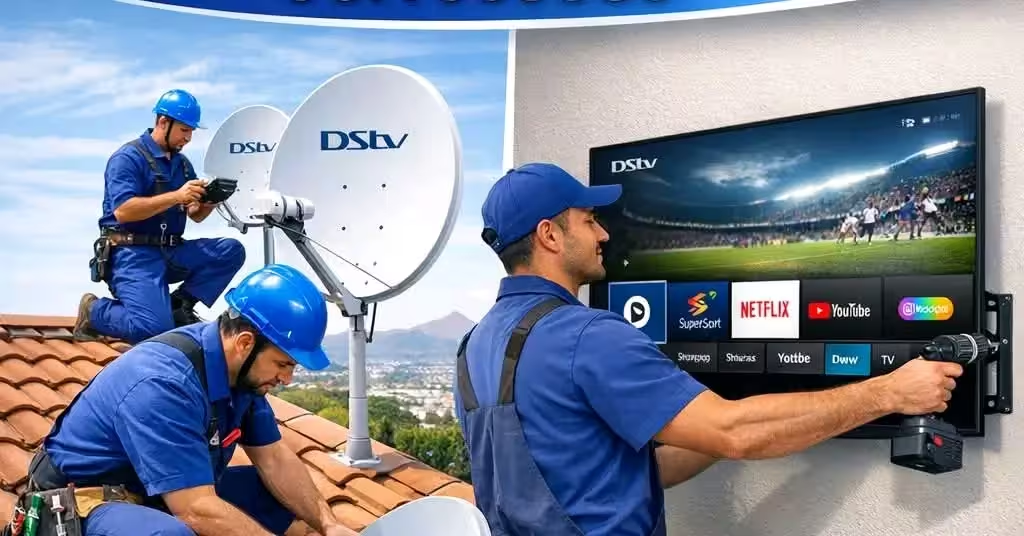
DStv dish wind alignment: quick answer
The quick answer is to separate decoder settings from installation faults. If the symptom returns after a restart, the installer should test signal quality, cable condition, LNB output and the final setup rather than guessing from the picture on the TV.
Key Takeaways
- Get signal quality readings before and after repair work.
- Outdoor cable joins, dish brackets and LNBs must be weatherproof in Cape Town conditions.
- Written warranty terms prevent confusion after the job is complete.
- Storm, wind and water faults often need parts tested, not only reset.
- A clean installation should be easier to inspect and maintain later.
Why this wind-related alignment problem happens
DStv systems combine outdoor satellite hardware with indoor electronics. A small weakness outside can show up as missing channels, freezing, failed setup, decoder errors or a service that works one day and fails the next. That is why proper testing matters more than quick part-swapping.
The official DStv help centre is useful for account and decoder guidance, but physical installation faults still need local testing. A Cape Town installer can check alignment, LNB type, cable loss and moisture damage at the property.
Best checks before replacing equipment
- Restart the decoder and note the exact message or symptom.
- Check whether all channels are affected or only certain channel groups.
- Inspect visible cable for cracks, sharp bends, loose joins or water marks.
- Check whether the problem appears after wind, rain, load shedding or storms.
- Ask the technician to test signal strength and quality with a meter.
- Confirm whether parts, labour and workmanship are covered by warranty.
- Keep the job card or quote with the final repair notes.
Comparison table
| Scenario | What it can mean | Best next step |
|---|---|---|
| Loose wall bracket | Dish shakes or twists | Refix with correct anchors |
| Weak pole | Signal drops in gusts | Replace or brace pole |
| Rusty bolts | Dish slips slowly | Replace hardware |
| Bad position | Wind hits dish directly | Move to stronger mounting point |
When to book a technician
Book a technician when the same fault keeps returning, when the dish or cable is on a roof, or when the issue involves storm damage, water ingress or LNB replacement. These jobs should be tested with the right meter and safe access equipment.
We help with homes and small businesses in areas such as DStv installation in Claremont DStv installation in Durbanville DStv installation in Bloubergstrand book a DStv technician. When booking, mention your decoder model, suburb, whether the system is private or communal, and what happened just before the fault started.
Common mistakes to avoid
- Do not replace a decoder before checking the dish, LNB and cable path.
- Do not leave outdoor connectors exposed to rain or coastal air.
- Do not accept verbal warranty promises only; get the scope in writing.
- Do not move the dish by eye after wind knocks it out of alignment.
- Do not ignore electrical safety after lightning or surge damage.
Practical Cape Town advice
Cape Town homes deal with strong wind, winter rain and coastal corrosion in many suburbs. That makes dish mounting, waterproof cable joins and correct LNB choice especially important. A neat cable run is not just cosmetic; it affects long-term reliability.
DStv dish wind alignment should be handled with a simple rule: test before replacing. Once the true cause is confirmed, the repair can be done once, noted properly and backed by a clear workmanship warranty where appropriate.
Budget also plays a part in how wind damage gets fixed. Re-anchoring a bracket costs far less than replacing a dish that finally tore loose in a winter gale, and a marked clamp makes every follow-up visit quicker. Insurance assessors increasingly ask for proof of maintenance after storm claims, so keep job cards and photographs of the mounting each time a technician confirms the dish alignment. That paper trail protects both your signal and your claim if the next south-easter wins the argument with an old bracket.
Cape Town wind and your dish: what actually moves it
Understanding DStv dish wind alignment starts with the local weather. Cape Town has two wind seasons: the summer south-easter and the winter north-wester that arrives with cold fronts. Each attacks a dish installation differently, and each leaves its own pattern of wind damage.
Why the south-easter is the main culprit
The south-easter blows for days at a time between October and March, with gusts well over 60 km/h in exposed suburbs. It rarely rips a dish off the wall. Instead, the constant vibration works like a slow spanner, backing off clamp bolts a fraction with every gust until the dish alignment drifts.
Because the drift is gradual, the first symptom is usually pixelation on HD channels during gusts, not a blank screen. Homes in Strand, Blouberg and Parklands sit in well-known wind funnels and suffer a loose dish bracket far sooner than sheltered southern suburbs do.

Wind-proof mounting: what a solid installation looks like
A dish that survives Cape Town wind is held by the right hardware in the right place. Compare the common mounting options:
| Mounting type | Wind resistance | Notes for Cape Town |
|---|---|---|
| Wall mount on brick, coach screws and nylon anchors | Good | Best all-round choice when the wall faces away from the south-easter |
| Fascia or barge-board mount | Poor | Timber flexes in gusts and the dish alignment drifts quickly |
| Roof pole through tile or sheet | Fair | Needs bracing and proper sealing against winter rain |
| Chimney or gable strap mount | Fair | Straps stretch over time; check tension yearly |
| Ground pole in concrete | Excellent | Ideal for windy plots if line of sight allows |
Position matters as much as hardware. Our guide on the right place to mount a DStv dish in Cape Town shows how a sheltered wall can halve wind damage without losing line of sight to the satellite.
Seasonal wind maintenance schedule
A simple routine keeps a loose dish bracket from ever reaching the falling-signal stage:
- September, before the south-easter season: hand-check the bracket, retighten clamp bolts and confirm signal quality readings.
- After any gale or storm warning: compare decoder signal readings against your last known-good numbers.
- April, before the winter fronts: reseal connectors and cable joins so rain cannot follow the wind damage. Water faults look similar, as our rain fade guide explains.
- Every 12 months: book a professional DStv dish realignment service with before-and-after meter readings.
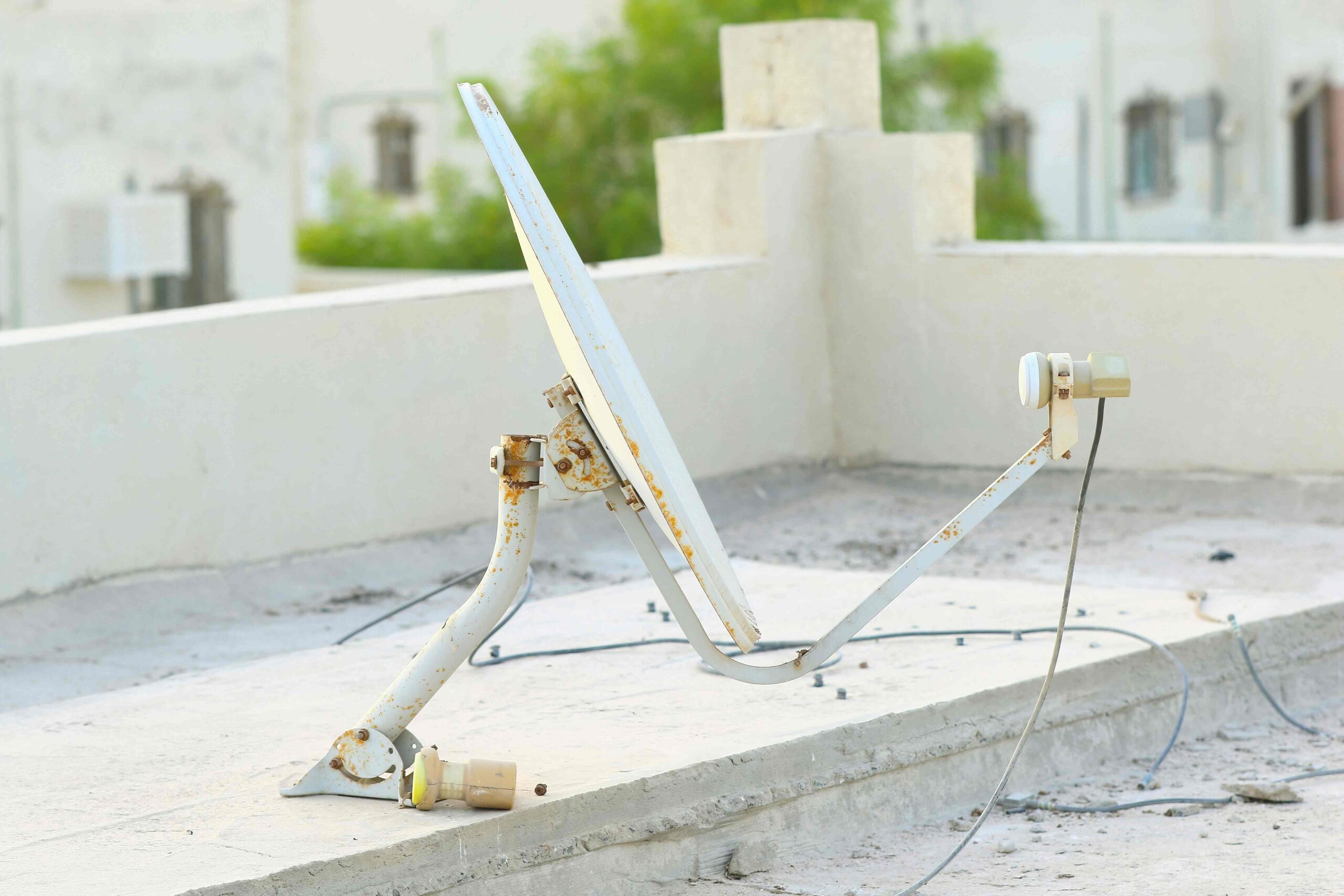
How installers fix a wind-shifted dish properly
A technician should never simply push the dish back and leave. The correct repair sequence is to refix or replace the mounting first, then set azimuth, elevation and LNB skew with a meter, then torque every fastener and mark the clamp position so future movement is visible at a glance.
On shared buildings the stakes are higher, because one wind-shifted dish can take out television for the whole block. See how SMATV and communal DStv systems are maintained and why some channels fail on a communal system after storms.

Related DStv Guides
- DStv dish brackets and mounting options
- DStv LNB prices in South Africa
- DStv cables and connectors guide
Need a DStv pro in Cape Town?
- DStv installers near me — certified local technicians across Cape Town
- DStv technician near me — book a skilled tech today
- DStv repairs near me — fast signal and decoder fixes
- DStv dish installation prices — 2026 Cape Town price guide
- DStv contact number Cape Town — local installer and repair line
More Cape Town DStv guides
Use these related maintenance guides if you are comparing options, diagnosing a fault, or planning a booking.
- What Is a SMATV or Communal DStv System?
- How Often Should a DStv Dish Be Realigned or Serviced?
- Why Some Channels Do Not Work on a DStv Communal System
- DStv installation cost in Cape Town
- DStv E48-32 signal error fixes
- where to mount a DStv dish
- DStv Explora vs HD decoder
- questions to ask a DStv installer
- book a Cape Town DStv call-out
- DStv installation in Somerset West
- DStv installation in Bellville
Frequently Asked Questions
Can I troubleshoot this myself?
You can restart the decoder, check visible cables and confirm the TV input. If the signal readings are unstable or the fault returns, a technician should test the outdoor system.
How do I know if this is a decoder fault?
A decoder fault is more likely when power, software or account functions fail while signal quality remains stable. Many picture and channel faults are actually dish, LNB or cable related.
Will a new LNB always fix signal loss?
No. A new LNB helps only if the LNB is faulty or wrong for the decoder. Cable loss, dish alignment and water ingress can create similar symptoms.
Should I ask for a warranty?
Yes. Ask what is covered, how long it lasts and what is excluded. Storm damage, customer changes and unrelated decoder faults may not be covered.
Can rain or wind cause intermittent DStv faults?
Yes. Wind can move a weak bracket, and rain can expose water-damaged cable joins. These faults often appear only during bad weather or shortly afterwards.
What information helps the installer?
Give the suburb, decoder model, error message, whether all channels are affected, and whether the fault started after wind, rain, power issues or building work.
Is this different for complexes?
Yes. Complexes may use shared dish systems, body corporate rules and wall points. The technician may need access to communal equipment, not just your decoder.