
If you experience DStv rain fade in Cape Town, you are not alone. The city’s notorious South-Easter fronts and Atlantic moisture make this one of the most dish-unfriendly environments in South Africa.
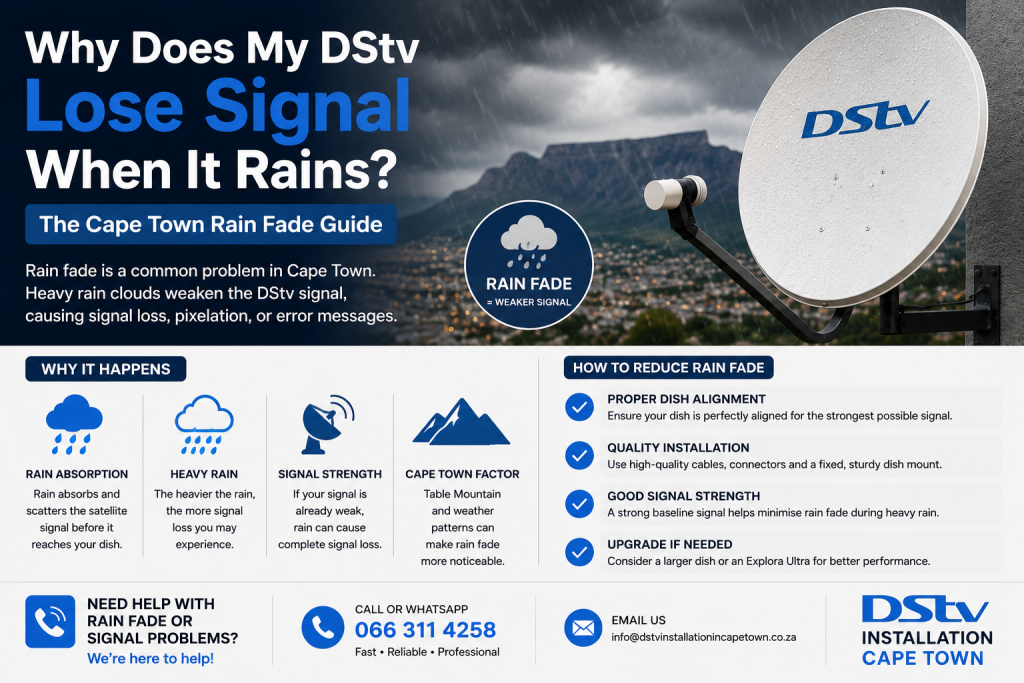
Rain fade happens when heavy rainfall absorbs and scatters the Ku-band satellite signal before it reaches your dish. This leaves you staring at the dreaded no signal error code E48-32 right when you want to watch the game.
To learn more about the cause of this issue, read about DStv Signal Loss When It Rains. Explore potential solutions and practical tips for preventing signal loss. Understanding DStv Signal Loss When It Rains will help you better prepare for adverse weather conditions. Keep in mind, this can be a common concern for many viewers, especially regarding DStv Signal Loss When It Rains.
Key Takeaways
- Rain fade is caused by water droplets absorbing the Ku-band satellite signal between the satellite and your dish.
- Cape Town’s south-westerly winter fronts make rain fade more frequent than in inland cities like Johannesburg.
- A larger dish (90 cm instead of the standard 60 cm) dramatically reduces signal dropouts.
- Dish alignment drift — common after Cape Town’s gale-force winds — amplifies signal loss during rain.
- A MultiChoice-accredited installer can realign your dish for R350–R600 in most Cape Town suburbs.
- Salt air corrosion on LNB connectors can reduce your signal margin to the point where even light drizzle kills the picture.
Understanding the issue of DStv Signal Loss When It Rains is crucial for effective troubleshooting and maintenance.
Protect Your DStv Signal from Rain Fade and Enjoy Reliable Viewing All Year Round
While it is normal for DStv signals to weaken during extremely heavy rainfall, frequent signal loss is often a sign that your satellite system requires attention. In many cases, poor dish alignment, a faulty LNB, damaged cabling, loose connections, or weak signal strength can make rain fade significantly worse.
A dish misaligned by even a few degrees can drastically reduce signal quality. Therefore, ensuring that your DStv installation is correctly aligned and professionally maintained is essential for minimizing weather-related disruptions.
Regular checks can identify problems early, allowing for timely interventions.
Furthermore, Cape Town’s winter storms, strong winds, and heavy rainfall can place additional strain on satellite installations. Homeowners who invest in regular inspections and professional signal optimization often experience fewer interruptions and better picture quality throughout the year.
Ultimately, a strong and properly configured DStv system is your best defense against rain fade and signal loss. Whether you need dish realignment, signal repairs, LNB replacement, cabling upgrades, or a complete DStv system inspection, professional assistance can help restore maximum signal performance.
For DStv signal repair and rain fade solutions in Cape Town and surrounding areas, contact DStv Installation Cape Town on 066 311 4258 or email info@dstvinstallationincapetown.co.za. Our experienced technicians are ready to help you enjoy uninterrupted entertainment, regardless of the weather.One useful tip is to monitor the weather forecasts and anticipate potential rainstorms. If you know rain is on the way, consider running a signal test beforehand. This can help you identify any existing issues that might worsen during a storm.
Additionally, investing in a satellite dish cover or waterproofing your connections can provide extra protection against rain fade.
Moreover, when strong winds accompany rain, there’s an increased chance of the dish being knocked out of alignment. Homeowners who invest in regular inspections often experience fewer interruptions and better picture quality.
It is advisable to schedule these inspections before the onset of winter or as part of your annual home maintenance routine.
For those who have faced persistent signal issues despite taking precautions, consulting with a professional can provide deeper insights. Technicians can assess your location’s specific characteristics, including surrounding structures that might obstruct the satellite signal.
They can also recommend the best dish size and type for your area, considering the unique weather challenges in Cape Town.
Ultimately, a strong and properly configured DStv system is your best defense against rain fade and signal loss. Equip yourself with knowledge of your system’s requirements and the environmental factors that can affect it. This way, you’ll be prepared to tackle issues as they arise.
Enhancing your understanding of DStv Signal Loss When It Rains will empower you to maintain your viewing experience effectively and take necessary actions when issues arise. Embrace the technology in your home and ensure that it works efficiently through every storm.