
Knowing where to mount a DStv dish in Cape Town is the single most consequential decision in any installation — the wrong location means permanent signal compromise that no amount of re-alignment can fully correct, while the right location delivers reliable reception through everything Cape Town’s weather throws at it.
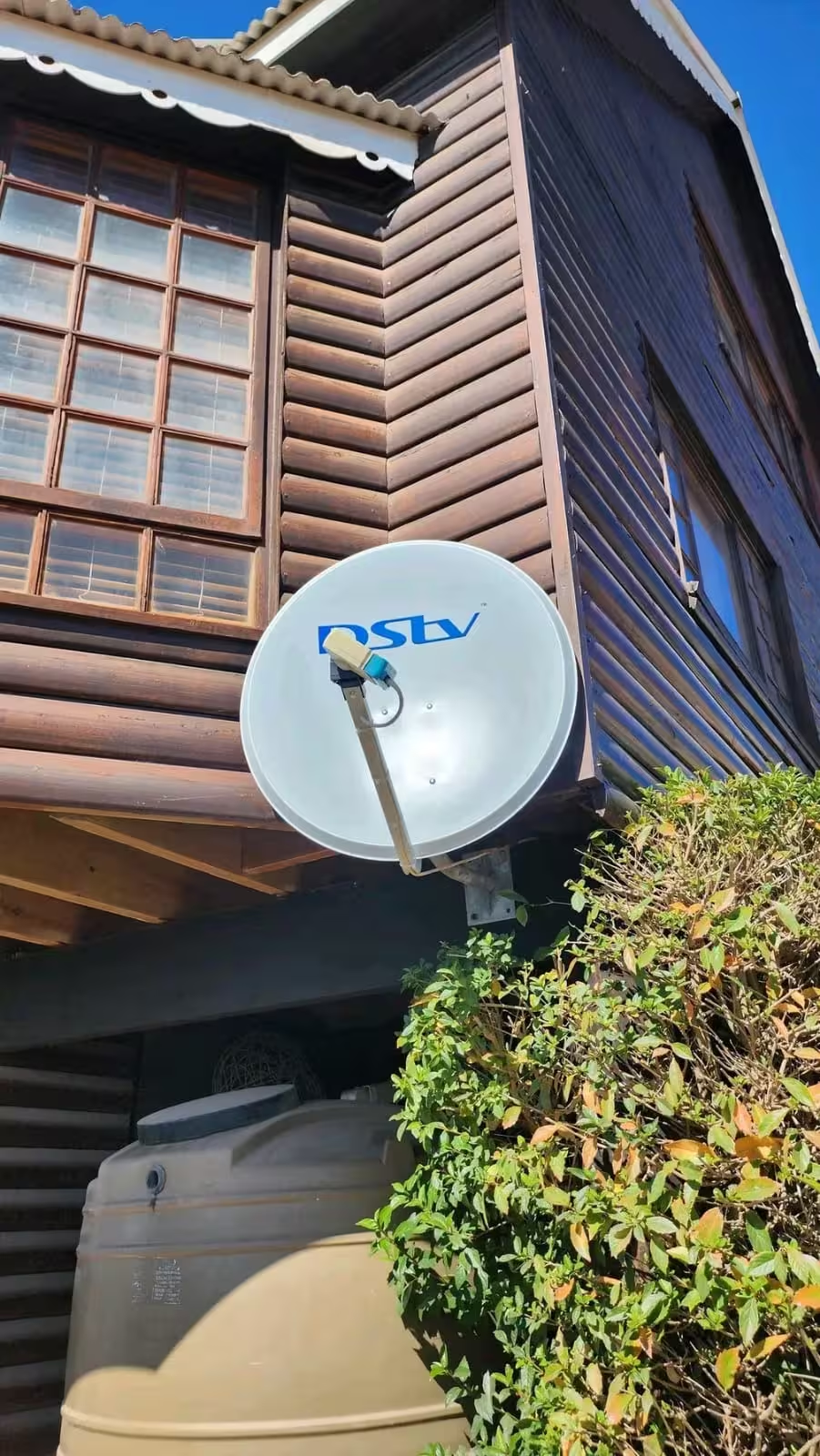
Key Takeaways
- The dish must have a clear, unobstructed view toward the south-east — trees, boundary walls, and your own roof overhangs are the most common blockers in Cape Town gardens
- The IS-20 satellite sits at approximately 160° azimuth and 49° elevation from central Cape Town — the dish points south-south-east, not due south
- Roof ridge mounts give the best elevation clearance but require heavy-duty wind-rated brackets in Cape Town’s south-easter environment
- Coastal properties within 3 km of the ocean should use stainless steel or hot-dip galvanised mounting hardware — standard mild steel corrodes within 12–18 months
- Sectional title properties must confirm body corporate rules before booking; the right to receive TV signals is protected by law but mounting location can be regulated
- A MultiChoice-accredited installer uses a signal meter during alignment — guessing the direction by eye is not reliable enough for a satellite lock
Mounting Location Comparison: Which Spot Works Best in Cape Town?
Choosing where to mount a DStv dish in Cape Town involves weighing signal quality against wind exposure, bracket durability, and future access for servicing. This table compares the five most common mounting positions used on Cape Town properties.
| Mounting Location | Signal Potential | Main Advantage | Primary Risk in Cape Town |
|---|---|---|---|
| Pitched roof ridge or apex | Excellent | Maximum elevation, fewest obstructions | High wind leverage — requires heavy-duty bracketing and sealed cable penetrations |
| Flat roof (ballasted or bolted) | Very good | No roof membrane penetration needed for ballasted mounts; easy repositioning | Must clear parapet walls in the south-east direction; UV degrades mounting straps over time |
| Exterior wall — south-east facing | Good to very good | Partially sheltered from direct south-easter loading | Hollow-core or face-brick walls need specialist fixings; verify wall construction first |
| Fascia board or eave bracket | Good | Quick installation, no roof penetration, low cost | Fascia boards flex in high winds — signal drops during strong south-easters common on the Cape Flats |
| Ground-level pole mount | Variable | Easiest to service and re-align | Established Cape Town gardens frequently have trees or walls blocking the south-east line of sight |
Where to Mount a DStv Dish in Cape Town: A Step-by-Step Decision Guide
Running through these steps before your technician arrives lets the installer confirm the location quickly and begin work immediately rather than spending billable time surveying the property.
- Face south-south-east from your property: Stand in your garden or on your roofline and face approximately 160° on a compass. This is the direction toward the IS-20 satellite from Cape Town. Note every obstruction — trees, walls, neighbouring buildings, and your own roof overhang — within roughly 50° either side of that bearing.
- Check elevation clearance up to 49°: The dish needs a clear view up to about 49° above the horizon in the south-east direction. Mounting on a south-east wall, then discovering that your own roofline blocks the upper elevation angle, is one of the most common — and expensive — installation mistakes in Cape Town.
- Assess wind exposure at the position: Visit the candidate spot during a moderate south-easter if you can. Properties on the Atlantic Seaboard, in Big Bay, and along the West Coast toward Milnerton regularly see sustained 60–80 km/h gusts. A standard pole mount deflects enough in those conditions to break the satellite lock — note whether the position is naturally sheltered by the building itself.
- Account for future tree growth: Young trees grow fast in Cape Town. A clear line of sight through a 2-metre sapling today can become a full signal blockage within three growing seasons. If any planting is planned in the south-east quarter of your garden, factor that in now rather than paying for a relocation later.
- Plan the cable route: The dish cable needs to reach your decoder with as few wall penetrations and sharp bends as possible. A mounting position that minimises cable run length reduces both signal loss and installation cost, and every wall penetration is a potential point of water ingress in Cape Town’s wet winters.
Cape Town-Specific Challenges: Wind, Salt Air, and Sectional Title Rules
Generic installation guides skip the local detail that makes where to mount a DStv dish in Cape Town a genuinely different decision from mounting one in Johannesburg or Pretoria.
Salt-air corrosion on coastal properties: Within about 3 km of the coast — from the Atlantic Seaboard through Bloubergstrand in the north to the False Bay shoreline through Strand and Gordon’s Bay — salt air aggressively corrodes standard mild steel poles and brackets within 12–18 months. As MultiChoice details in its dish and decoder setup guide, coastal installations require additional protection measures. Specify stainless steel or hot-dip galvanised hardware when quoting for your installation — the additional cost pays back in years of reliable service rather than a rusted bracket two winters later.
The south-easter’s wind load: The south-easter gusts above 70 km/h across the Cape Peninsula multiple times per year. A 1.2 m dish in that wind creates significant lateral force on the bracket and mounting point. Where possible, mount on the east face of the building — using the building itself as a windbreak — while maintaining the required south-east sightline to the satellite. This dramatically reduces the bracket stress compared to a fully exposed south-west facing mount.
Sectional title and body corporate rules: Body corporates in Cape Town’s numerous apartment complexes and gated estates frequently regulate mounting locations to preserve building aesthetics. South African law protects a resident’s right to receive television signals, so a blanket ban on dishes is not legally enforceable. However, the body corporate can legitimately restrict which faces and positions are permitted. In densely developed suburbs like Durbanville and Somerset West, confirm the rules of conduct with your managing agent before booking — a technician who arrives to find the chosen position is ruled out will still charge the call-out fee.
Why Professional Installation Matters More in Cape Town Than Anywhere Else
A dish mounted in the wrong location or on under-specified brackets will need to be relocated or reinforced — typically at full cost again. A professional accredited installer evaluates the satellite direction with a compass and signal meter rather than guessing by eye, selects bracket hardware matched to your specific wall or roof construction, and waterproofs every roof cable penetration correctly.
In Cape Town’s winter rain season, an unsealed cable penetration through a roof tile or fascia board can cause water ingress damage that costs far more to repair than the entire dish installation. Getting the mounting right the first time is an investment, not an expense. Our team covers installations across the Cape peninsula and coastal suburbs. Request a quote for your property and we will assess the best mounting position and specify the right bracket hardware for your location before the job begins.
Frequently Asked Questions: Where to Mount a DStv Dish in Cape Town
Where to mount a DStv dish in Cape Town for the strongest signal?
A roof ridge or apex mount typically gives the strongest signal because it provides the highest elevation clearance toward the south-east with the fewest obstructions. In Cape Town’s windy conditions, balance this against wind exposure — a partially sheltered east-facing wall mount often delivers 95% of the signal quality of a fully exposed ridge position, with significantly less stress on the bracket over time.
Can I mount a DStv dish on a flat roof in Cape Town?
Yes, and flat roofs are often an excellent option. Ballasted mounts — weighted stands that sit on the flat roof surface without any penetration — are widely used in apartments and commercial buildings across Milnerton, Bloubergstrand, and City Bowl. They cause no damage to the roof membrane and are easy to reposition. The dish must be mounted high enough on the stand to clear any parapet walls in the south-east direction.
How high off the ground does a DStv dish need to be?
There is no fixed minimum height — the dish simply needs to clear whatever obstructions stand between it and the satellite in the south-east direction. For a single-storey Cape Town property with a high boundary wall, that usually means fascia board level or above. For properties with tall trees on the south-east boundary, only a roof ridge mount may achieve a clear line of sight. Your installer will assess the specific sightlines during the site visit.
Will Cape Town’s south-easter physically shift my DStv dish?
Yes, and it happens more often than people expect. A strong south-easter gusting above 70 km/h can shift a dish by 1–2 degrees from its aligned position if the bracket has loosened over time or was not correctly torqued on installation. That small shift is enough to drop signal quality from strong to marginal or below. The fix is a re-alignment and bracket retorque — a call-out fee applies. Using heavier-gauge brackets and checking the mount annually reduces the frequency of these service calls significantly.
My body corporate won’t allow a dish on the roof — what are my options?
South African law protects a resident’s right to receive television signals — a body corporate cannot issue a blanket ban on dishes. They can regulate mounting location to preserve building appearance. If the permitted positions do not allow a workable signal — for example, only a north-facing wall is approved and that faces directly away from the satellite — request a technical exemption. An accredited installer can provide a written report confirming the regulated position makes reception impossible, which supports your exemption request to the managing agent.
Does the satellite direction change between Cape Town’s northern suburbs and southern suburbs?
The azimuth (compass direction) and elevation shift slightly between locations, but not enough to change your mounting position decision. From central suburbs the azimuth is approximately 160–162° at 49° elevation. Properties further north toward Durbanville and Kraaifontein see a slightly higher elevation; properties on the far south peninsula see it marginally lower. All of these differences are small enough that the same south-south-east mounting position works across the entire Cape Town metro area.
Is a timber-framed wall acceptable for mounting a DStv dish in Cape Town?
Yes, provided the installer uses fixings appropriate for timber — lag bolts or through-bolts into solid timber studs, not masonry anchors drilled into a void. Many Cape Town properties, particularly older homes in Rondebosch, Claremont, and the southern suburbs, have timber-framed extensions or outbuildings. Tell your installer about the wall construction when booking so they arrive with the correct hardware and can confirm the stud spacing is adequate for the bracket specification.
Related DStv Guides
- DStv dish brackets and mounting options
- permission to install a DStv dish
- DStv satellite dish setup guide
- DStv satellite dish prices
Need a DStv pro in Cape Town?
- DStv installers near me — certified local technicians across Cape Town
- DStv technician near me — book a skilled tech today
- DStv repairs near me — fast signal and decoder fixes
- DStv dish installation prices — 2026 Cape Town price guide
- DStv contact number Cape Town — local installer and repair line
More Cape Town DStv guides
Use these related installation setup guides if you are comparing options, diagnosing a fault, or planning a booking.
- Do You Need a Decoder to Use DStv Streaming?
- How to Check DStv Signal Strength and Quality
- DStv ExtraView Setup: The Best Simple 2026 Guide
- How to Reset or Restart a DStv Decoder Correctly
- How Long Does a Standard DStv Installation Take?
- DStv installation cost in Cape Town
- DStv E48-32 signal error fixes
- DStv Explora vs HD decoder
- questions to ask a DStv installer
- DStv dish realignment and servicing
- book a Cape Town DStv call-out
- DStv satellite dish prices