
Getting the right DStv dish size is the single biggest factor in whether your signal stays rock-solid through Cape Town’s wind and winter rain. Too small a dish and you will battle pixelation and “no signal” errors; the correct size gives you a strong, stable picture all year. Here is exactly what size you need in South Africa and why it matters.
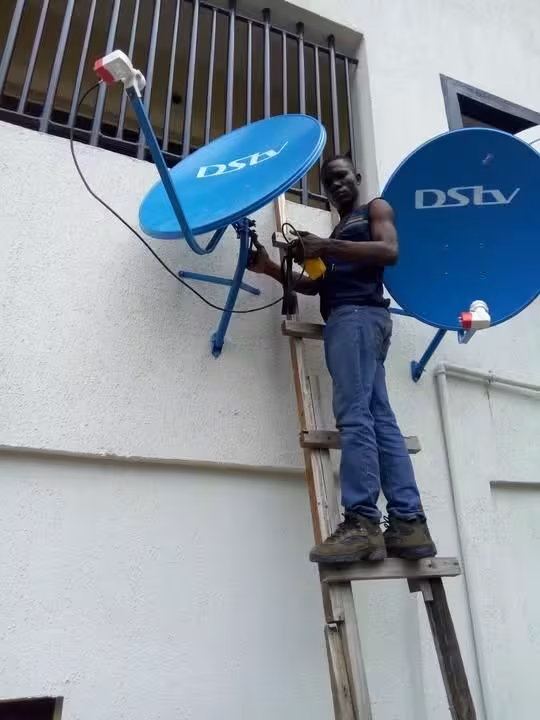
Key Takeaways
- The standard DStv dish size for most South African homes is 90 cm, which balances strong signal with a manageable footprint.
- A larger 1.2 m or 1.8 m dish is used for communal systems, coastal high-rain areas, or weak-signal pockets.
- The old 60 cm and 80 cm dishes still work but offer less margin against rain fade and are no longer recommended for new installs.
- Choosing the right DStv dish size only helps if the dish is aligned precisely to the satellite and fitted with a matched LNB.
- Coastal Cape Town suburbs that get heavy winter rain benefit from the extra signal margin of a 90 cm dish or larger.
What DStv Dish Size Do You Need in South Africa?
For the vast majority of homes, the recommended DStv dish size is 90 cm. This is the dish MultiChoice specifies for standard residential installations because it captures enough signal to ride out rain fade — the temporary signal drop you get during heavy downpours. Smaller dishes save a little money and look neater, but they leave almost no headroom, so the first big Cape storm tends to knock the picture out.
Larger dishes are about reliability, not better picture quality. A 1.2 m dish is common for guesthouses, blocks of flats and SMATV systems where one dish feeds many decoders, while 1.8 m dishes appear in commercial or very weak-signal locations.
DStv Dish Size Comparison
| Dish Diameter | Typical Use | Rain-Fade Margin |
|---|---|---|
| 60 cm | Legacy single-home installs | Low |
| 80 cm | Older residential installs | Moderate |
| 90 cm | Recommended standard home install | Good |
| 1.2 m | Communal / guesthouse / coastal | High |
| 1.8 m | Commercial / very weak signal | Very high |
Why Bigger Is Not Always Better
A larger dish gathers more signal, but it also catches more wind, needs stronger mounting, and is harder to align. For a normal house, a correctly aligned 90 cm dish outperforms a poorly aligned 1.2 m dish every time. That is why precise installation matters more than simply buying the biggest dish you can find. MultiChoice publishes its current equipment guidance on the official DStv website, and our technicians follow those specifications on every install.
If you are unsure which DStv dish size suits your property, we assess your location, signal strength and roof access before recommending a size — request a quote to get started. We fit and align dishes across the metro, including Bloubergstrand and Wynberg.
Get the Dish Size Right the First Time
Replacing an undersized dish later costs more than fitting the correct DStv dish size at installation, because it means a second call-out, new brackets and re-alignment. When we install or upgrade a dish, we factor in your suburb, how exposed your roof is to wind, and how much rain your area gets in winter, then fit the size that gives you years of stable signal rather than the cheapest option that just scrapes by on a clear day. That small upfront decision is what keeps your picture solid through every Cape Town storm.
Beyond Diameter: What Else Determines Your Signal
Diameter is only half of the DStv dish size story. The LNB bolted to the arm, the bracket holding everything to the wall, and the suburb you live in all change what “the right dish” means. These are the details installers weigh up before recommending a size.
Dish Size and the Smart LNB: A Matched Pair
Every modern installation pairs the dish with a Smart LNB — the current LMX501 and LMX502 models carry 30 user bands and feed an Explora, an ExtraView decoder and a streaming box through far fewer cables than the old multi-LNB setups. A perfectly sized dish with a tired or mismatched LNB still delivers a poor picture.
Our guide to the Smart LNB for the DStv Explora unpacks the model numbers, and if your picture has slowly worsened on an older dish, check these signs that your DStv LNB needs replacing before paying for a bigger reflector you may not need.

Wind Loading and Mounting in Cape Town’s Southeaster
Cape Town’s famous summer southeaster puts sustained pressure on a dish that inland towns never experience. A bigger reflector catches more wind, so jumping to 1.2 m on an exposed Blouberg or Strand rooftop without heavy-duty brackets is asking for alignment drift.
The mounting position matters as much as the dish size: a sheltered gable wall often beats a chimney mast for stability. We explain the trade-offs in our guides on where to mount a DStv dish in Cape Town and why dishes move out of alignment in wind.

Communal and SMATV Dish Sizing for Flats
Blocks of flats work differently: one large, professionally aligned dish feeds a multiswitch that serves every unit. Body corporates usually specify a 1.2 m or larger satellite dish because dozens of households depend on its rain-fade margin.
If you live in a complex, read up on how SMATV communal DStv systems work and what a communal DStv installation costs before anyone mounts a private dish on a shared wall.
Old Dish, New Decoder: When You Can Reuse What You Have
Upgrading to an Explora or Explora Ultra does not automatically mean a new reflector. A sound 80 cm or 90 cm dish can usually stay; the LNB is what gets swapped. Our comparison of the DStv Explora vs HD decoder covers which hardware each box demands, and whether an old satellite dish works with a new decoder answers the reuse question in detail.
Budget-wise, a dish upgrade is a modest line item next to cabling and labour. The full price breakdown lives in our DStv installation cost guide for Cape Town, so you can see where a larger dish does — and does not — change the quote.

Installation-Day Checklist for the Correct Dish
When our technicians arrive to fit or upgrade a dish, the size decision is confirmed on site rather than guessed over the phone. A quick checklist keeps the install honest:
- Measure existing signal with a meter at the proposed mounting point, not just at the decoder.
- Check sightline to the satellite — trees, new buildings and even seasonal foliage can shave precious decibels.
- Assess wind exposure and choose brackets rated for the position, especially on coastal rooftops.
- Match the LNB to the decoders in the house so the dish, cable and boxes work as one system.
- Weatherproof every connector, because water in the cable mimics the symptoms of an undersized dish.
That last point catches many homeowners out: moisture in a connector causes the same pixelation as a too-small reflector, and replacing the dish does nothing to fix it. Decoder choice plays a part too, since a PVR pulling from multiple tuners is less forgiving of marginal signal than a basic single-view box.
Skipping the survey is how properties end up with a dish that scrapes by on clear days and fails in July downpours. Five minutes with a signal meter settles the size question with data instead of guesswork, and it is included in every quote we issue. Get the survey done first, and the right DStv dish size follows naturally from the numbers on the meter rather than from a salesperson’s hunch.
Related DStv Guides
- DStv LNB prices in South Africa
- DStv cables and connectors guide
- DStv business installation packages
Need a DStv pro in Cape Town?
- DStv installers near me — certified local technicians across Cape Town
- DStv technician near me — book a skilled tech today
- DStv repairs near me — fast signal and decoder fixes
- DStv dish installation prices — 2026 Cape Town price guide
- DStv contact number Cape Town — local installer and repair line
More Cape Town DStv guides
Use these related decoder and hardware guides if you are comparing options, diagnosing a fault, or planning a booking.
- How to Know If Your DStv LNB Needs Replacing
- How to Activate or Fix Showmax on a DStv Decoder
- Smart LNB for DStv Explora: 5 Best Essential Facts
- DStv Explora vs HD Decoder: The Best Simple 2026 Guide
- How Lightning Damages DStv Equipment and Prevention Tips
- DStv installation cost in Cape Town
- DStv E48-32 signal error fixes
- where to mount a DStv dish
- questions to ask a DStv installer
- DStv dish realignment and servicing
- book a Cape Town DStv call-out
Frequently Asked Questions
Is a 90 cm dish enough for DStv in Cape Town?
Yes. A 90 cm dish is the recommended size for standard homes and gives enough signal margin to handle Cape Town’s winter rain when it is correctly aligned.
Can I use a 60 cm dish for a new DStv install?
It will work in clear weather, but the small dish has little rain-fade margin, so you are likely to lose signal during storms. We recommend 90 cm for new installs.
Does a bigger dish give a better picture?
No. Picture quality is fixed by the broadcast; a bigger dish only improves reliability in poor weather or weak-signal areas. Alignment matters more than size.
What dish size do flats and complexes use?
Communal SMATV systems typically use a 1.2 m dish feeding a multiswitch, so every flat shares one well-aligned dish instead of dozens of small ones.
Will the wind affect my dish in coastal Cape Town?
Strong coastal wind can nudge a dish out of alignment over time, which is why we use heavy-duty brackets and recommend a periodic realignment check.
How do I know if my current dish is the wrong size?
Frequent pixelation in light rain, recurring “no signal” errors, or a very small legacy dish are all signs. A technician can measure your signal and advise whether an upgrade helps.